
Seeing Beyond Appearances
The Reincarnated Demon King's Host Just Wants to Live in Peace, But the Hero Won't Leave Him AloneThe encounters with Wicker, Malthios, and Theo expose how assumptions about bodies and identities can obscure a person’s actual choices.
increasing Bearing strength in each event
 decreasing
Bearing strength in each eventdecreasingThe Mask and the Missing Heartbeat

The Mask and the Missing Heartbeat
A hidden condition noticed
Theo recognizes that Wicker has no heartbeat, though the rest of the party has not noticed. The masked necromancer’s body does not fit the group’s assumptions about a living companion.
The person remains recognizable
Wicker explains their liminal condition and speaks of being happy with their identity. Luc and several companions affirm that they remain the friend they know.
The encounter separates unfamiliar appearance from moral character. The party’s response is not perfect or unanimous, but it makes room for Wicker to describe themselves rather than be defined by fear.
The Demon in the Healer

The Demon in the Healer
A title overwhelms a person
Once Theo’s identity is revealed, many court members see only the Demon King’s host. His history as the village healer is recast as a possible disguise or manipulation.
Conduct becomes evidence
The trial makes the party and Leafel describe what Theo has actually done: saved companions, protected neighbors, and restrained Malthios. His identity cannot be separated from risk, but neither can his choices be ignored.
The conflict asks whether a person should be judged by the dangerous being within him or by the agency he has exercised. The narrative refuses both easy denial and automatic condemnation.
A Former King in a Café

A Former King in a Café
Power appears in an ordinary room
Malthios enters Fox Tales with horns, wings, and a tail, making it impossible to mistake him for an ordinary villager. He is anxious about the attention and unsure whether he is welcome.
Conduct shifts the encounter
Amaya greets him, serves him tea, and speaks as she would to a person rather than a throne. Malthios listens and admits that he hopes to contribute to the village.
The scene reverses the court’s framing of Malthios as only a threat. It does not deny what he has done; it lets him appear in the present as someone capable of making a different choice.
Eliza’s Expected Enemy
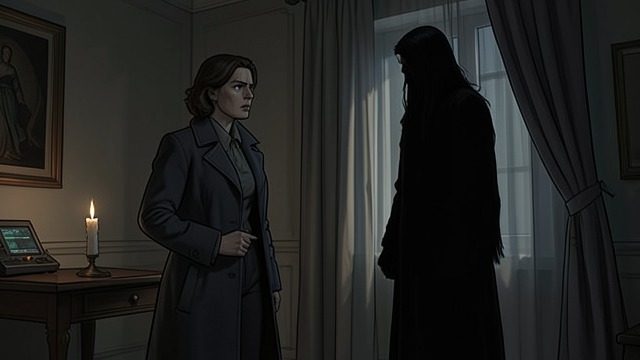
Eliza’s Expected Enemy
A fixed judgment challenged
Eliza believes that a demon’s nature cannot change and treats Theo as an extension of Malthios. Her challenge assumes that any apparent restraint is temporary or deceptive.
Mercy contradicts the frame
Theo defeats her but heals her rather than leaving her to die. The act does not make him harmless; it shows that his power and identity do not dictate the same choices Eliza expects.
Eliza’s belief is confronted by evidence, not a claim of innocence. Whether she accepts that evidence is hers to decide, but she can no longer pretend Theo has acted exactly as she predicted.
The Village Sees Both Souls

The Village Sees Both Souls
Identity disclosed without separation
Theo introduces Malthios to Leafel in his transformed shape. The villagers can see the Demon King’s form while still addressing the person who has lived among them through Theo.
A relationship is allowed to continue
The community’s curiosity and welcome offer Malthios a place to begin earning trust. Theo no longer needs to present himself as only one thing in order to remain part of his village.
The moment does not resolve every question about two souls sharing one body. It demonstrates that recognition can begin with seeing the whole truth and still treating the people involved as capable of choice.
During the road journey before Ashenhave
At Theo’s public trial
During Malthios’s first ordinary visits to Leafel
During Theo and Eliza’s duel
After Theo and Luc return to Leafel
